


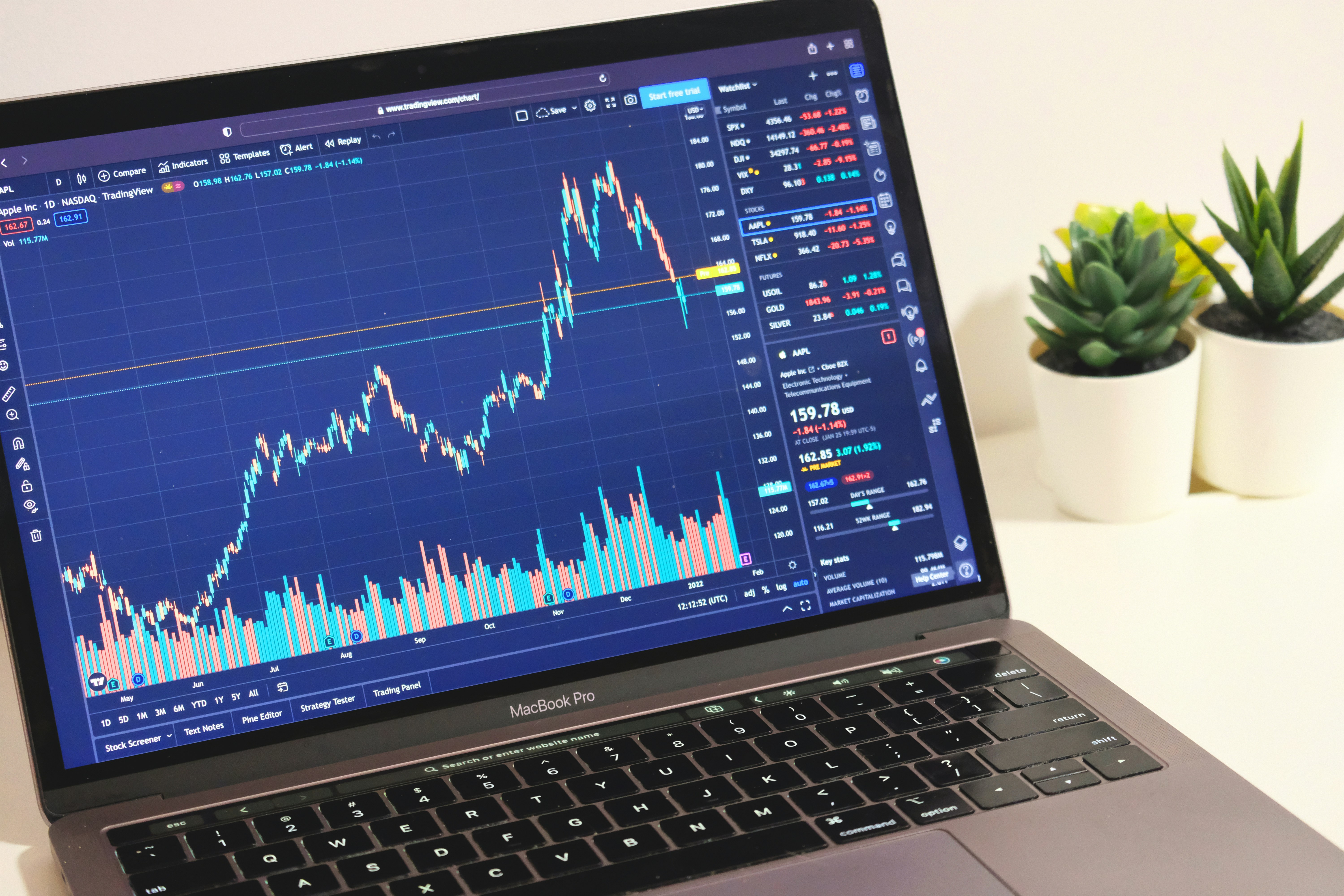
Trading is a process of making decisions under uncertainty. Prices can move for reasons that are difficult to predict, and even careful analysis cannot remove the possibility of loss. A trading strategy provides a structured basis for action: it sets out the conditions for entering a position, the reasons for holding it, and the signals or circumstances that may prompt an exit. Without these rules, decisions can become inconsistent, driven more by emotion or short-term price movements than by a considered plan.
Risk management addresses a different but closely connected question: how much capital to expose and how to respond when conditions change. It may include setting a maximum position size, defining a loss limit, diversifying exposure, or deciding in advance when to reduce or close a trade. These controls help contain the consequences of an adverse outcome and support consistent decision-making. They do not, however, make every trade safe. A potentially profitable strategy can still fail when losses are allowed to grow without control, while disciplined limits alone cannot make an unsound strategy profitable. Both elements are necessary, and neither guarantees a positive result.
In practice, strategy and risk controls should be designed together. Entry and exit rules have little meaning unless the trader also understands the possible loss, and a risk limit is difficult to apply consistently without clear trading rules. A practical plan therefore states what must be true before a trade is opened, how exposure will be sized, and what action will follow if the trade moves against expectations. It should also be reviewed as market conditions and personal circumstances change. No approach guarantees returns, and past performance does not assure future results. Methods should be adapted to an individual’s objectives, experience, time horizon, and tolerance for loss. Traders should consider whether they can afford the potential losses and seek qualified advice where appropriate. The aim is not to eliminate uncertainty, but to make decisions within understood limits.
Trading approaches differ in the market behavior they seek to exploit. Trend following aims to participate in sustained upward or downward movement, using rules to identify a direction and remain in a position while that movement persists. Mean reversion takes the opposite premise: when prices move unusually far from a typical level or range, they may return toward it. Breakout trading looks for price to cross a defined support, resistance, or volatility boundary, on the assumption that the move may continue as activity expands. Momentum trading also seeks continuing price strength or weakness, often ranking assets by recent performance. Range trading instead focuses on prices oscillating between established boundaries, buying near support and selling near resistance while the range holds. These methods rely on different conditions, and no approach works equally well in every market.
The appropriate time horizon is another important choice. Intraday traders open and close positions within a session, requiring time to monitor prices closely and account for frequent transaction costs. Swing traders typically hold positions for several days or weeks, seeking intermediate moves while checking markets less continuously. Position traders may hold for months or longer, focusing on broader trends and accepting that short-term fluctuations can occur along the way. A strategy’s expected holding period affects its exposure to overnight gaps, fees, spreads, and changing market conditions, so these factors should be considered alongside its signals.
Personal circumstances matter as much as market analysis. Limited screen time may make intensive intraday activity impractical, while low liquidity or high trading costs can undermine approaches that depend on frequent entries and small price movements. Temperament also plays a role: some traders prefer clear directional moves, while others are more comfortable trading reversals or defined ranges. Consider whether you can follow the method during losses, wait for valid signals, and manage open positions consistently. Rather than adopting a fashionable tactic, choose an approach that fits your schedule, resources, and tolerance for uncertainty. Describe its entry, exit, and risk rules in plain language, then apply them consistently and evaluate results over a meaningful sample of trades.
A broad market view is only a starting point; it becomes a strategy when translated into observable conditions and repeatable actions. Define the instruments to be traded, the time frame, and the market environments in which the idea is expected to work. For example, specify whether the setup applies to a particular asset, a range of liquid contracts, or markets showing a defined trend or volatility profile. These boundaries prevent a rule developed for one context from being applied indiscriminately elsewhere.
Next, describe the entry signal and the evidence required to confirm it. State what price behavior, indicator reading, or combination of conditions qualifies as a trigger, and identify whether the intended position is long or short. Confirmation criteria should be measurable, such as a close beyond a level or a stated relationship between price and a reference average. Also set exit conditions in advance, including the point at which the trade thesis is invalidated, a profit-taking method, and any time-based exit. Specify circumstances in which no trade should be taken, such as inadequate liquidity, excessive spreads, conflicting signals, or a scheduled announcement likely to disrupt execution.
Rules should be precise enough to limit impulsive decisions without pretending that every market event can be anticipated. Define exceptions narrowly: if unusual volatility, breaking news, or unreliable order execution arises, the plan might require reducing exposure, waiting, or standing aside. Record the assumptions behind each rule, including the market regime and data used to develop it. This makes later review more informative and helps distinguish a valid adaptation from an after-the-fact justification. Test the rules on historical data and, where practical, in simulated or small-scale live conditions, while accounting for transaction costs and slippage. Avoid designing conditions solely around past winning examples; hindsight can make a pattern appear clearer and more dependable than it was in real time. A written decision process provides a consistent basis for evaluating both trades taken and opportunities deliberately passed over.
A trading strategy should be evaluated in stages before meaningful capital is committed. Begin by inspecting the historical data for gaps, inconsistent timestamps, incorrect prices, and other quality problems. Confirm that the sample covers enough observations and includes varied conditions, such as trending, range-bound, volatile, and quiet markets. A strategy that performs well in only one environment may be exposed to risks that its initial results do not reveal.
Next, translate the approach into clearly defined entry, exit, sizing, and risk rules, then backtest those rules consistently. Include realistic commissions, bid-ask spreads, slippage, and financing costs where relevant; omitting these expenses can make frequent trading appear more profitable than it is. Review several performance measures together. Win rate shows how often trades close profitably, while average win and average loss indicate the typical size of gains and losses. Expectancy estimates the average outcome per trade, accounting for both probability and payoff. Maximum drawdown describes the largest peak-to-trough decline, and risk-adjusted return relates performance to the risk taken.
No single statistic establishes that a method is robust. A high win rate, for example, can coexist with occasional losses large enough to outweigh many small gains. Maximum drawdown also depends on the test period and does not guarantee a similar future experience. Interpret results across market regimes and consider whether returns depend on a small number of unusually successful trades.
Guard against common testing errors. Overfitting occurs when rules are tuned too closely to past observations and fail on new data. Look-ahead bias uses information that would not have been available at the time of a trade; survivorship bias excludes failed or delisted assets from historical samples. An inadequate sample can produce misleading results by chance. Reserve data for out-of-sample testing rather than using every observation to design the strategy. If results remain credible, proceed to paper trading or very small live positions. Compare actual execution with assumptions, monitor costs and drawdowns, and scale gradually only when observed behavior supports the test findings.
Position sizing links a trade’s entry price and stop level to the amount of account capital placed at risk. First, decide the maximum monetary loss you are prepared to accept if the stop is reached. Then calculate the expected loss per unit: for a straightforward asset, this is the distance between the entry price and stop price, converted into the account’s currency. Divide the planned loss limit by that per-unit amount to estimate the position size. For example, a $200 risk budget and a $2 loss per share imply a position of 100 shares before adjustments.
Instrument details can change the calculation. Futures and other contracts may have a multiplier or tick value, while foreign exchange and some derivatives require conversion from the quote currency. Include commissions, exchange fees, and other expected transaction costs so the estimated loss is not understated. If the calculation produces a fractional contract that cannot be traded, round down to a permitted size rather than exceeding the risk budget. Recalculate whenever the entry, stop, account value, or contract specifications change.
A consistent approach sets the risk budget in advance, often as a predetermined fraction of current account equity. This keeps exposure proportionate as the account grows or declines and avoids sizing trades according to confidence, a recent winning streak, or a desire to recover a loss. A stop order is a planning reference, not a guarantee of an exact exit: gaps, fast markets, or limited liquidity can cause execution at a less favorable price. Leverage also magnifies both gains and losses, and may increase costs or trigger liquidation before a planned stop is reached. Leave room for these uncertainties by choosing a conservative size, monitoring total exposure across related positions, and ensuring a plausible adverse outcome remains within the account’s broader risk limits.
Before entering a trade, define the price or condition that would show the original idea is no longer valid. This invalidation point should reflect the strategy’s logic, such as a broken support level, a volatility threshold, or a change in the underlying premise. Set the stop with reference to that condition and the asset’s typical movement, not merely at a convenient round number. Then size the position so a stop-out produces an acceptable loss. If the required stop distance makes the position too large for the risk budget, reduce the size or skip the trade. Moving a stop farther away after entry simply to postpone recognizing a loss changes the planned risk and can turn a controlled position into an uncontrolled one.
Trade safeguards also need to work across the portfolio. Several positions may appear separate while responding to the same market driver: companies in one sector, assets tied to a common currency, or instruments sensitive to interest rates can decline together. Review both direct holdings and less obvious correlations, and monitor concentration by sector, asset type, and overall market exposure. Estimate how much could be lost if multiple related trades reach their stops during the same adverse move. A portfolio’s aggregate open risk matters more than the risk assigned to each trade in isolation; many individually modest positions can create substantial combined exposure.
Practical controls can include a ceiling on planned risk across open trades, a daily or weekly loss threshold, and a rule to pause trading after unusually large losses. A pause creates time to check execution, market conditions, and whether the strategy is behaving as expected, rather than encouraging rushed attempts to recover. Limits should be calibrated to account size, strategy, volatility, and the possibility of gaps or slippage; a stop order cannot guarantee an exit at its trigger price. Review the rules periodically and define in advance what happens when a threshold is reached. These controls support disciplined decisions, but they are not foolproof: losses can exceed estimates, correlations can change, and no fixed limit removes market risk.
Trading plans should respond to changing volatility and liquidity without abandoning their underlying logic. Volatility affects how far prices may move during a trade, while liquidity influences how easily orders can be entered or exited. A position size that was appropriate in calm, active conditions may become excessive when price swings widen or market depth declines. Review these conditions before trading and adjust exposure according to predefined rules rather than reacting impulsively to each price movement.
When volatility increases, a strategy may require a wider stop to allow for ordinary market fluctuations. If the stop is farther from the entry price, the position generally needs to be smaller to keep the potential monetary loss within the same risk limit. This relationship helps prevent larger price swings from quietly increasing account risk. Thin markets create a different challenge: fewer buyers or sellers can mean greater slippage, wider spreads, and more difficulty closing a position near the intended price. In such conditions, smaller orders, limit orders where appropriate, or no trade may be more suitable than normal execution plans.
Market regimes also affect which approaches are likely to perform as intended. A sustained trend may suit a strategy designed to follow directional movement, while a stable range may favor methods that act near established boundaries. News releases and other high-volatility events can produce abrupt gaps, reversals, and unreliable fills, making it sensible to reduce exposure or stand aside if a strategy has not been tested for those conditions. Distinguish a genuine change in market behavior from a brief run of losses. Repeatedly altering entry, exit, or risk rules after a short losing streak can undermine a tested edge and make results difficult to evaluate. Define objective thresholds in advance—for example, volatility limits, liquidity requirements, or a specified drawdown—for reducing activity, pausing trades, or formally reassessing the strategy. Consistent criteria support adaptation while preserving disciplined risk control.
A repeatable trading routine turns a strategy into observable decisions rather than a series of reactions. Before each session, review the broader market context, including trend, volatility, liquidity, and any conditions that may alter how a setup behaves. Mark the specific patterns or price areas you intend to trade, and define what would invalidate each idea. Check scheduled economic releases, company announcements, and other events that could disrupt execution or widen spreads. Set daily loss and exposure limits in advance, and confirm that your planned position sizes fit those boundaries.
During the session, use a written checklist to compare each potential trade with your entry criteria. If the setup is incomplete, wait rather than forcing a decision. Once in a position, follow the planned exit conditions, including stop placement and profit-taking rules, unless a clearly defined change in market conditions requires action. Avoid increasing size to recover losses or because a trade feels especially certain. Record meaningful deviations, such as entering early, moving a stop, or skipping a valid setup, while the details remain fresh.
After trading, maintain a journal for every position. Include the rationale, entry and exit prices, position size, transaction costs, relevant market conditions, emotional state, and final outcome. Note whether the trade followed the plan, not only whether it made or lost money. This distinction helps prevent a profitable but poorly executed trade from reinforcing a harmful habit, or a well-managed loss from being mistaken for a failed process.
Review performance across a meaningful sample of trades rather than reacting to one unusual result. Look for recurring patterns in setup selection, execution, risk, and costs, and assess whether results align with the strategy’s expectations. Separate process quality from short-term luck: sound decisions can lose, while weak decisions can occasionally win. Make measured adjustments only when the evidence supports them, changing one element at a time where practical. Continue tracking outcomes after each change so the routine develops through observation and disciplined testing, not isolated wins, losses, or temporary frustration.
Several common behaviors can undermine even a carefully designed trading strategy. Revenge trading—placing impulsive trades to recover a loss—often replaces planned decisions with emotional reactions. Overtrading can generate avoidable fees and expose an account to weak setups, while excessive leverage magnifies both gains and losses. Moving a stop farther from its intended level may turn a controlled loss into a damaging one. Traders may also overlook commissions, spreads, financing charges, and slippage, which can materially reduce performance. Copying another person’s strategy without understanding its assumptions makes it difficult to judge when conditions have changed. Finally, increasing position size after a winning streak can create overconfidence and expose accumulated gains to disproportionate risk.
A more sustainable improvement plan begins with selecting one approach that is understandable and suited to the trader’s goals, time, and experience. Write down its entry and exit criteria, position-sizing method, and conditions for standing aside. Test the rules carefully using historical data and, where possible, simulated trading; recognize that past results do not guarantee future performance. Set a modest risk budget that is affordable, define a maximum loss threshold, and begin with small position sizes. Include transaction costs in testing and planning rather than treating them as an afterthought. Keep a record of trades, rationale, risk, costs, and outcomes so that decisions can be assessed against the written rules rather than memory or emotion.
Review records at scheduled intervals, not after every fluctuation, and adjust rules only when evidence supports a change. Protecting capital, maintaining emotional discipline, and continuing to learn are central to long-term decision-making, though no process can remove market risk or ensure returns. Trading can result in substantial financial loss. Seek guidance from a qualified financial professional when appropriate, and never risk money you truly cannot afford to lose under any circumstances.